









Always in sync, even across episodes
No more "wait, let me pause" moments. Our sync engine keeps everyone frame-perfect—even when you binge multiple episodes in one party.
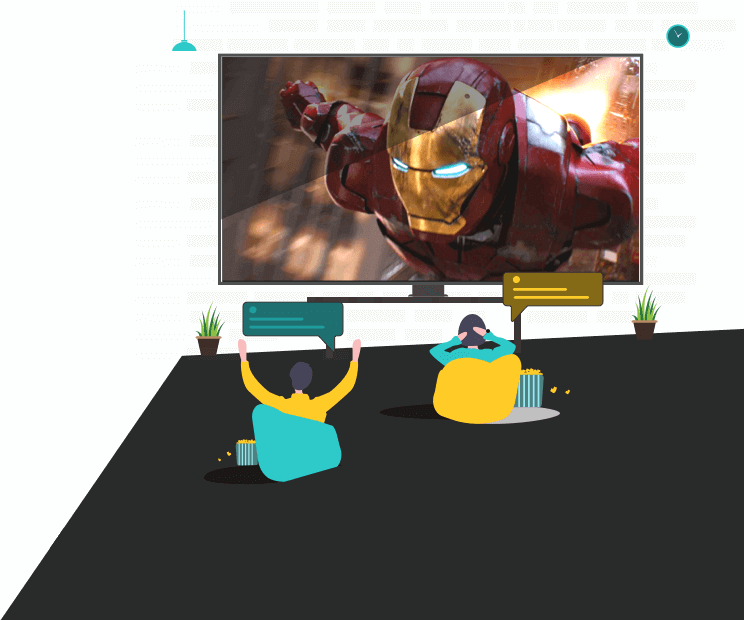
Start playing any video on Netflix, Disney+, or 10+ supported platforms.
Click the Flickcall logo on top right once video starts or hit the Flickcall icon on chrome toolbar. Your watch party is ready in one click.
Copy the party link and send it to your friends. They join with one click—no sign-up required.
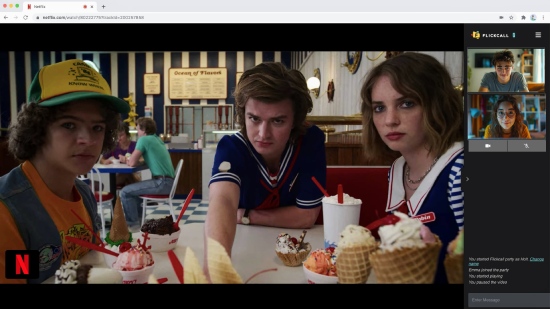
Create watch parties on Netflix, Disney+, JioHotstar, JioHotstar, HBO Max, MAX, Hulu, Prime Video, Youtube, Zee5, Sony Liv, JioHotstar with Flickcall.

No more "wait, let me pause" moments. Our sync engine keeps everyone frame-perfect—even when you binge multiple episodes in one party.

Catch your friends gasping at plot twists. Share laughter in real-time. Video chat makes every watch party feel like you're on the same couch.

Install the extension, play any video, click the Flickcall icon. That's it—share the link and you're watching together.
When you pause video, your mic unmutes. When you play, it mutes. Smart Mic knows when you need to talk. No fumbling with buttons, just natural conversation.

We use peer-to-peer technology to connect you directly with your friends. Your video calls and chats are never routed through our servers unless direct connection is blocked*.
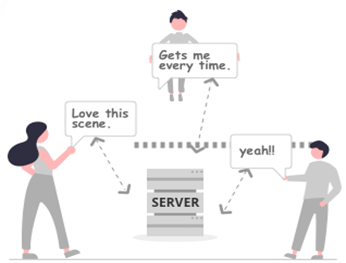
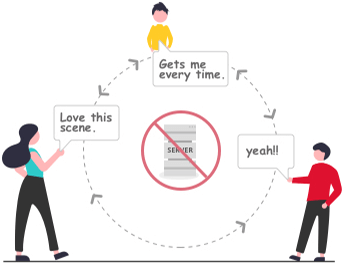
* In some cases, firewall setting doesn't allow direct connection, the calls and messages are encrypted and transmitted via routing servers.
The text typically opens with the foundations: what it means to be an animal, the essentials of classification, the tree of life, and the unifying principles of evolution and development. Readers are invited into a panoramic tour that ranges from the simplest sponges and cnidarians to the elaborate body plans of arthropods, the multiple innovations of mollusks, and the vertebrate lineage culminating in mammals and birds. Each major phylum is treated with attention to comparative anatomy, life cycles, ecological roles, and evolutionary relationships.
The text typically opens with the foundations: what it means to be an animal, the essentials of classification, the tree of life, and the unifying principles of evolution and development. Readers are invited into a panoramic tour that ranges from the simplest sponges and cnidarians to the elaborate body plans of arthropods, the multiple innovations of mollusks, and the vertebrate lineage culminating in mammals and birds. Each major phylum is treated with attention to comparative anatomy, life cycles, ecological roles, and evolutionary relationships.